

The Intelligence Architects
A specialized engineering team built for the operational data layer — the infrastructure beneath the intelligence.
Why We Exist
Why We Exist
Built from the inside of operational reality.
The Lineage
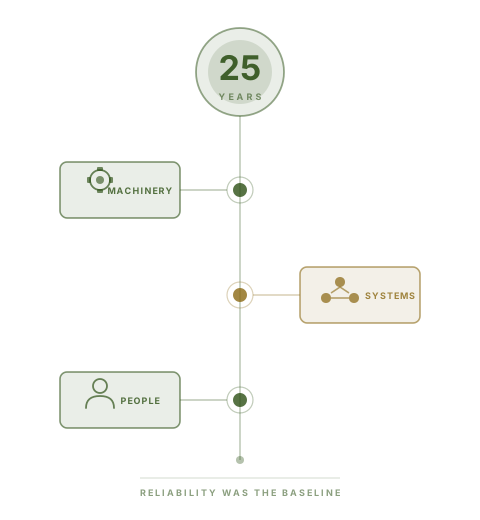
Prayaas Group spent twenty-five years operating inside industrial environments — close to the machinery, the systems, and the people responsible for keeping them running. Reliability was not a design goal there. It was the baseline expectation, every single day.
When that chapter closed, what remained was not a legacy to replicate — but an operational understanding that very few in the intelligence infrastructure space can claim to have earned firsthand.
The Observed Gap
Across enterprise environments, a pattern kept surfacing with uncomfortable consistency. Organizations had modernized — cloud infrastructure, reporting dashboards, automation tooling. The surface looked structured.
Beneath it, the intelligence layer remained fragmented. Critical operational data lived across disconnected files, siloed applications, and undocumented workflows. Reporting cycles stretched across days. Decision-makers were working from delayed visibility, not operational truth. Teams spent more time assembling information than acting on it.
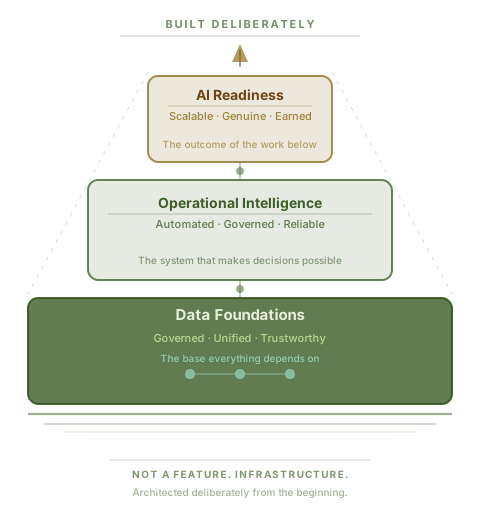
When AI began entering enterprise conversations seriously, the gap became impossible to ignore. Organizations wanted intelligent systems without first building the governed, unified data foundations those systems fundamentally depend on.
The Response
Prayaas DataTek was created in direct response to that reality. Not as a reporting agency. Not as a dashboard consultancy. Not as an AI-first company chasing the current cycle.
But as an operational intelligence infrastructure practice — built to help enterprises establish the foundational layer that scalable automation, reliable intelligence, and genuine AI readiness actually require.
We believe operational intelligence is not a feature added after growth.
It is infrastructure that must be architected deliberately from the beginning.
That conviction shapes not just what we build — but the architectural philosophy we bring to every engagement.
Intelligence Philosophy
How we think about intelligence infrastructure.
These are not positions we revisit per engagement. They are the architectural convictions that shape every system we design, every intelligence layer we structure, and every infrastructure decision we make.
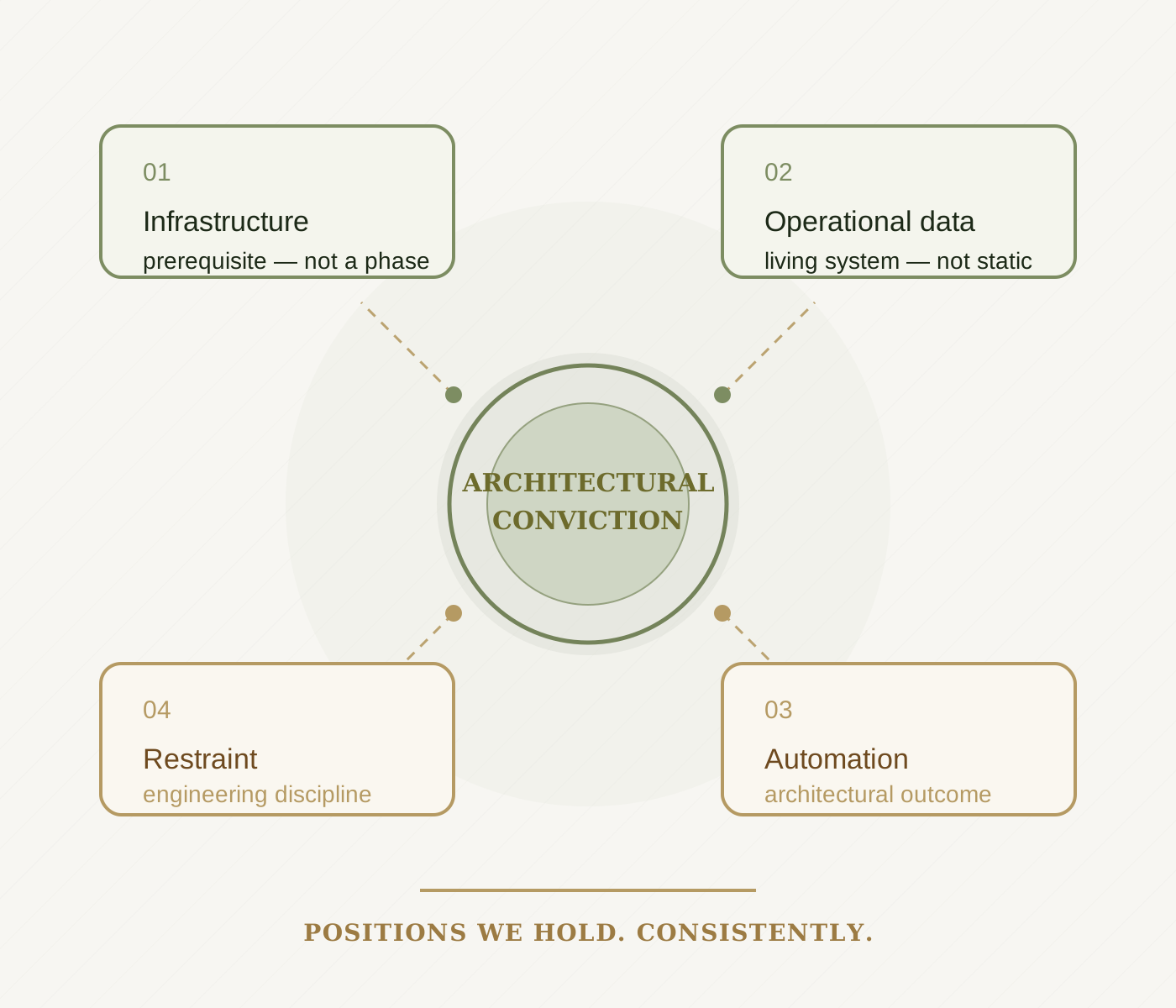
Intelligence infrastructure is a prerequisite, not a phase
Enterprises often treat structured data foundations as preparatory work before transformation begins. In reality, it is the transformation. Every advanced analytics capability, automated workflow, and AI initiative depends entirely on the reliability, governance, and continuity of the underlying infrastructure supporting it.
Operational data is a living system, not a static deliverable
A pipeline delivered once and left to degrade is not infrastructure — it is a temporary project artifact. Operational environments evolve continuously. New systems emerge. Schemas change. Business logic shifts. We design intelligence systems capable of evolving alongside that complexity — without requiring constant re-architecture.
Automation is an architectural outcome, not a tooling choice
Automation does not begin with workflows. It begins with operational clarity. When enterprise data becomes governed, unified, and structurally reliable, automation stops being a separate initiative and becomes the natural outcome of a correctly engineered system.
Restraint is a form of engineering discipline
We do not build more than operational reality requires. Every layer, integration, and architectural decision must justify its existence through measurable operational value — not technological novelty or trend-driven complexity. Simplicity that survives scale is engineering maturity.
Philosophy without operational discipline is positioning. The two must function as a single system.
Operational Discipline
Capability and restraint are both architectural choices.
The long-term quality of an intelligence system is defined not only by what is implemented — but by what is intentionally refused. Operational discipline requires holding both with equal conviction.
End-to-end automated data infrastructure
Governed, scalable intelligence architecture
Operational KPI and decision-support systems
Real-time reporting and visibility infrastructure
AI-ready enterprise data foundations
Embedded intelligence delivery environments
Surface-level dashboards disconnected from operational systems
One-time reporting projects without automation continuity
Generic BI implementations without governed infrastructure
AI initiatives built on fragmented or unstructured data foundations
Architectures optimized for demonstrations instead of production resilience
Systems that create long-term operational dependency instead of internal capability
These boundaries are not positioning statements. They are the operational commitments that determine who we can genuinely serve — and how.